In the Post-War period, artists in both France and the United Kingdom start to question the image of the human figure in the climate of uncertainty that permeates the spirit of the times. In this context, the "art informel" will focus on the dissolution of the human figure, which seems at times completely submerged in a thick magma of matter.
We are pleased to present a selection of works from the Post-War School of Paris which all make use of impasto, the pictorial technique of rendering a thick layer of painting with visible brushstrokes. This technique becomes more widely used in Post-War abstract expressionnism on both sides of the Atlantic, for artists such as the British Auerbach, the Americans Willem de Kooning and Franz Kline, or the French Eugène Leroy, Jean Dubuffet and Jean Fautrier.
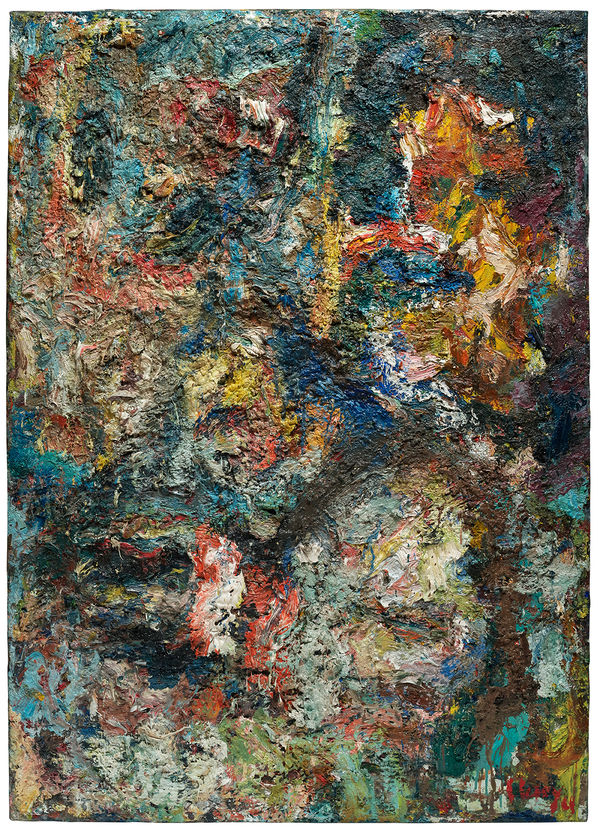
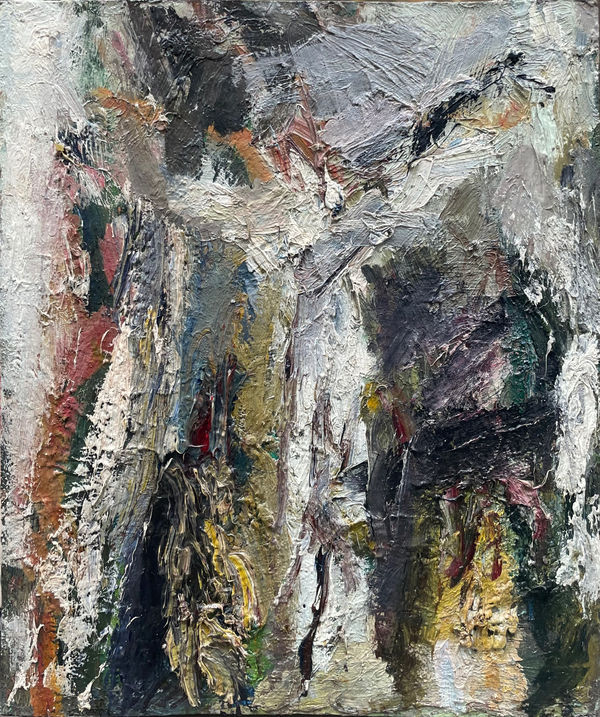
In the context of French "art informel", artists such as Eugène Leroy pushed the limits of Figurative art towards Abstraction. In his paintings, in keeping with the humanist and Existentialist currents of the times, the human figure is submerged in a magma of pictorial matter, to the point it becomes almost unrecognizable. Similar to the British artist Auerbach, his highly expressionnist figurative paintings become almost sculptural in their thick layer of paint. Early on, the artist attracts the admiration of Baselitz, and as such of his art dealer, Michael Werner, who will represent him from then on.
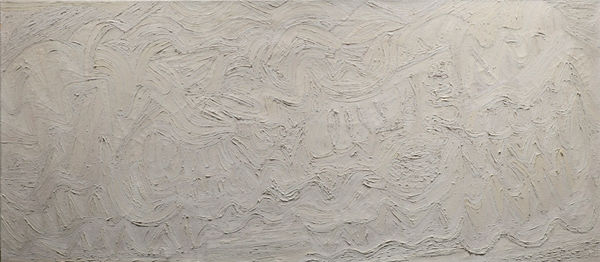
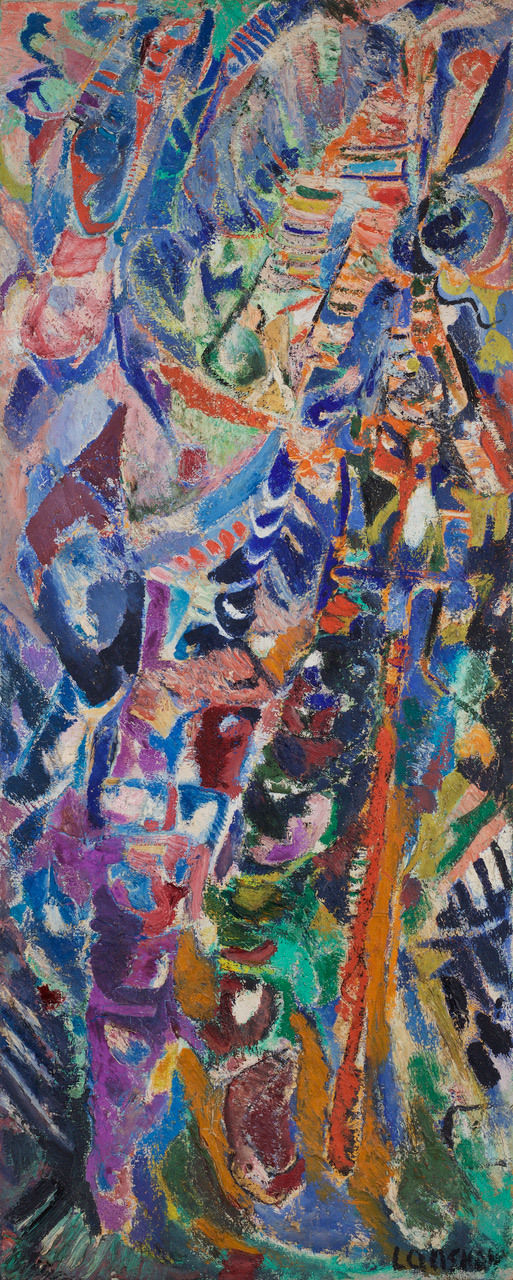
In another vision of impasto painting, pioneer of monochrome painting Serge Charchoune utilizes thick, visible brushstrokes, the only point of contrast in his monochrome canvases, in order to render visible the musical rhythm of his works. Similar to him, André Lanskoy also uses thick brushstrokes to create rhythm, but this time in a bright colour scheme that characterizes his works from the late '40s and early 50s. André Masson, inventor of Action painting and Automatic drawing, on the other hand, utilizes impasto in the mid-50s in order to transform the calligraphic sign into pure form.
Discover their different approaches to painting and matter in our selection.
-
 Eugene Leroy, Composition (Visages), 1968
 -
Eugene Leroy, Crucifixion ou Christ en croix,, 1950
-
Serge CharchouneInspiré par les Sylphides de Chopin Var. II, 1962Oil on canvas80 x 180 cmSigned and dated on the lower right corner.
Titled and localized on the back. -
André Lanskoy, Expansion du printemps, 1952
-
André MassonFête , 1956Oil on Canvas90 x 81 cmSigned on the lower left side "André Masson"