Le Printemps asiatique 2026

 Galerie Charpentier (Paris 8e)
On the Ground floor
https://www.printemps-asiatique-paris.com/exposants-/jean-fran%C3%A7ois-cazeau
Galerie Charpentier (Paris 8e)
On the Ground floor
https://www.printemps-asiatique-paris.com/exposants-/jean-fran%C3%A7ois-cazeau
For its fourth participation in the Printemps Asiatique, which this year takes place at the Galerie Charpentier from 5 to 8 June, the Galerie Jean-François Cazeau has chosen to showcase the Franco-Chinese masters of the Second School of Paris, such as T’ang Haywen (1927–1991), Chu Teh-Chun (1920–2014) and Zao Wou-Ki (1920–2013), as well as major figures in Japanese art such as Léonard Tsuguharu Foujita (1886–1968) and Yayoi Kusama (born 1929). This selection will subsequently be on display at its Marais gallery from 9 June to 4 August, offering visitors the chance to explore these major figures of the 20th century in greater depth.
In 1948, fleeing the early stages of a China undergoing political upheaval, Zao Wou-Ki and T’ang Haywen settled in the French capital, joined in 1955 by Chu Teh-Chun. This trio of exiled artists found in Paris the ideal environment to practise and develop their art. Across the post-war world, combining technical skill, intuition and spontaneity, the three artists fused Asian tradition with European lyrical abstraction.
At the heart of this dialogue, ink painting occupies a prominent place. A millennia-old art form and a pillar of Asian visual culture, it remains, for 20th-century Chinese painters, the preferred vehicle for a spiritual and technical quest. This aesthetic of the ‘sign’, characterised by economy of means and the power of the gesture, breaks free from the constraints of figurative realism and linear perspective. By transcending narrative to focus on the intrinsic energy of the line, this practice marks a natural transition towards abstraction.
It is precisely this ontological dimension of ink that has held a lasting fascination for post-war Western art movements. The exhibition thus highlights the historical connections between this Eastern tradition and the explorations of the Second School of Paris, as well as those of Lyrical Abstraction. Whilst ink forms the central theme of this selection, the use of ceramics and watercolour enriches this body of work. These mediums allow the artists to explore new textures and to contrast the lightness of the brushstroke with the permanence of fire. By creating a dialogue between these media, the exhibition invites visitors to rediscover how modernity drew on millennia-old roots to invent a language steeped in modernity.
The influence of these masters cannot be fully understood without a broader perspective on artistic exchanges between Asia and Paris. This trajectory echoes that of the Franco-Japanese artist Léonard Tsuguharu Foujita (1886–1968), who, from the 1920s onwards, made his mark in Montparnasse, foreshadowing the ability of the exiled artist to reinvent his own tradition.
-
 Zao Wou-Ki, Sans titre, 1979
 -
Chu Teh-ChunSans titre , 1994Signed and dated on the lower left, in both French and Chinese charactersInk on paper45 × 34 cm
17 7/10 × 13 2/5 in -
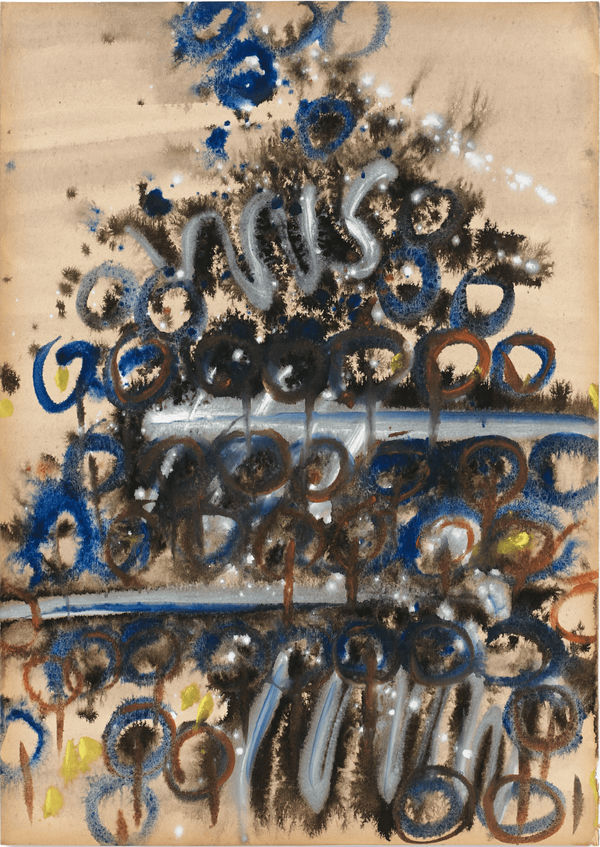
T'ang HaywenSans titre, 1967Gouache and ink on Kyro board.70 x 50 cm.
-
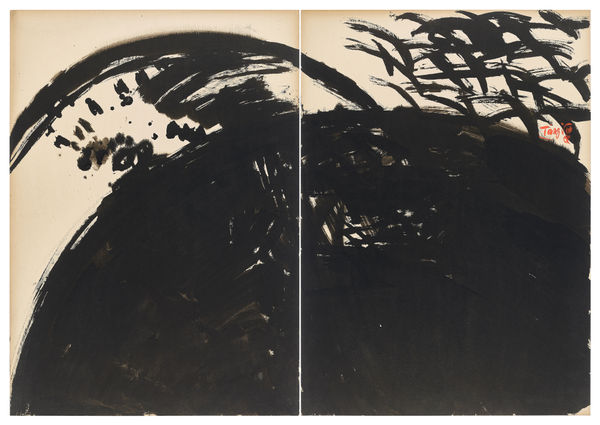
T'ang HaywenSans titre, 1975Ink on Kyro board70 x 100 cm
27 1/2 x 39 3/8 in.
Diptych -
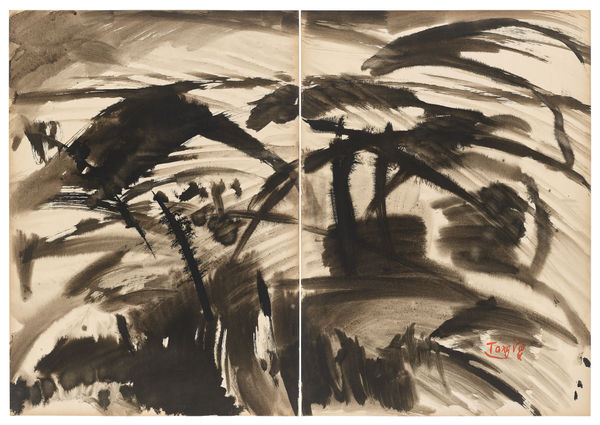
T'ang HaywenSans titre, 1972-3Ink on Kyro board70 x 100 cm
27 1/2 x 39 3/8 in.
Diptych -
T'ang HaywenSans titre, 1970Ink on Kyro board70 x 100 cm
27 1/2 x 39 3/8 in.
Diptych -
T'ang HaywenSans Titre, 1970Signed on the lower right cornerInk on Kyro cardboard (diptych)70 x 100 cm
-
T'ang HaywenSans Titre, 1970Signed on the upper right cornerInk on Kyro cardboard (diptych)70 x 100 cm
-
T'ang HaywenSans titre (Portrait), 1985Watercolour on Arches paper11 x 15 cm
-
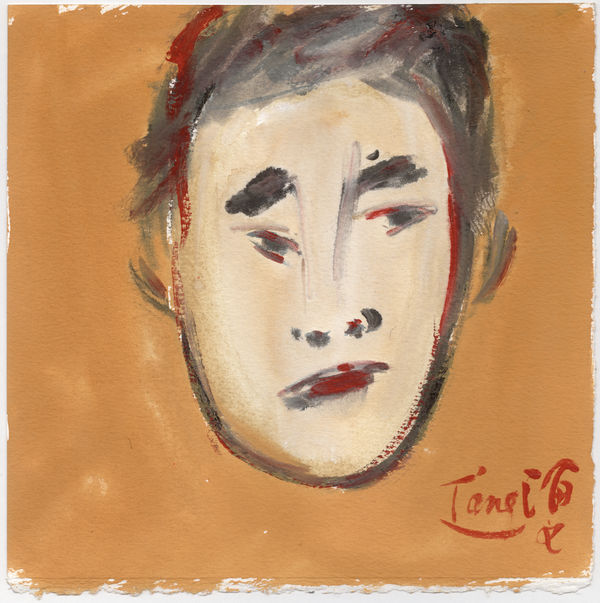
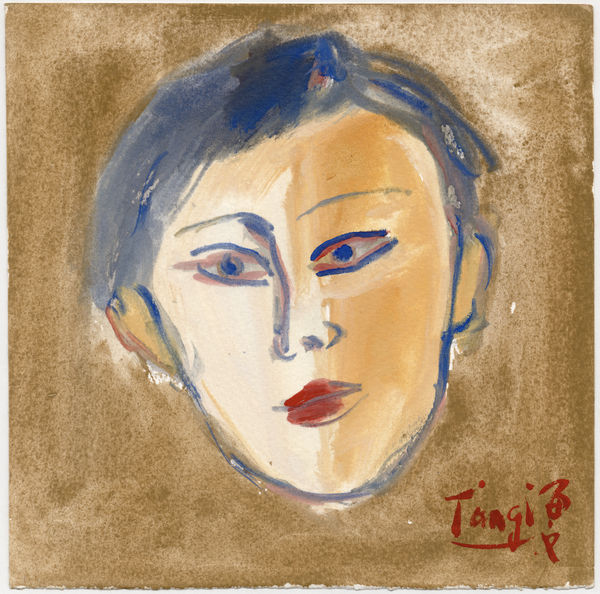
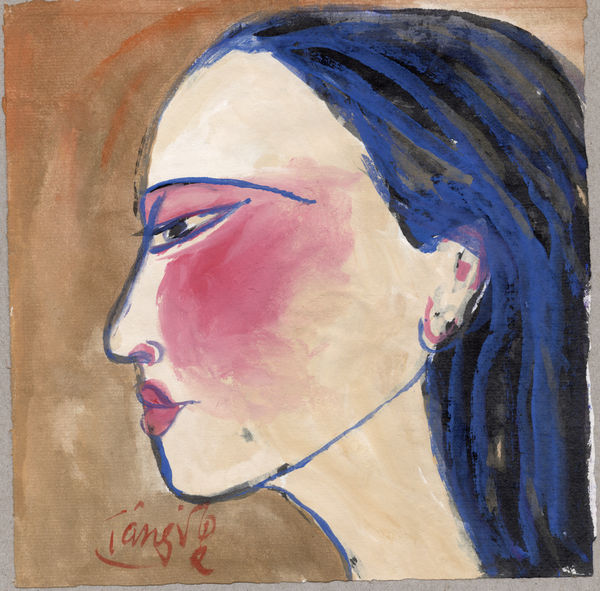
T'ang HaywenPortrait, 1985-1990Signed on the lower right-hand corner.Ink, watercolour and gouache on Arches paper.18 x 18 cm.
-
T'ang HaywenPortrait, 1985-1990Signed on the lower right hand corner.Ink, watercolour and gouache on Arches paper.18 x 18 cm.
-
T'ang HaywenPortrait, 1985-1990Signed on the lower right-hand corner.Ink, watercolour and gouache on Arches paper.18 x 18 cm.
-
T'ang HaywenPortrait, 1985-1990Signed on the lower left corner.Ink, watercolour and gouache on Arches paper.18 x 18 cm
-
Zao Wou-Ki, Composition, 1962
-
Zao Wou-KiRêve dans le pavillon rouge, 2008Signed in Pinyin, inscribed in Chinese and numbered '1⁄8' (on the underside)Enamel paint on porcelain30 × 20 × 20 cm
11 4/5 × 7 9/10 × 7 9/10 inEdition of 8, n°1/8(Edition record) -
Zao Wou-KiSans titre, 1967Signed and dated "67" in the lower rightWatercolour on paper27.5 × 24.5 cm
10 4/5 × 9 3/5 in -
Li Chevalier, Distant Light, 2016
-
Li ChevalierPassagers de l'existence, 2022Signed and dated by the artist on the reverseInk on canvas60 × 60 cm
23 3/5 × 23 3/5 in -
Li ChevalierThe River of Absence, 2019Signed and dated by the artist on the reverseInk on canvas150 × 70 cm
59 1/10 × 27 3/5 in