Pablo PICASSO: MasterPrints

Sheet: 45.5 x 52 cm
Pablo Picasso created throughout his career a vast body of graphic work, producing around 2,400 drypoints, aquatints, lithographs and linocuts between 1905 and his death. He practiced and experimented with all etching techniques, often breaking new ground in the artistic field of printmaking. Unlike his contemporaries, such as Miro, Braque or Chagall, from 1930 onwards Picasso's prints took on a life of their own, freeing themselves from his pictorial work.
They represented a catalyst for Picasso's boundless creativity Picasso's boundless creativity, presenting ever-different themes and styles. The artist's work and life are closely intertwined. Each time Picasso embarks on a new love affair - with Fernande Olivier, Olga, Marie-Thérèse, Dora Maar, Françoise Gilot or Jacqueline - a new creative flight and a change of style follow.
A master painter of the 20th century, Pablo Picasso created throughout his career a vast body of graphic work, producing around 2,400 drypoints, aquatints, lithographs and linocuts between 1905 and his death. He practiced and experimented with all etching techniques, often breaking new ground in the artistic field of printmaking.
Unlike his contemporaries, such as Miro, Braque or Chagall, from 1930 onwards Picasso's prints took on a life of their own, freeing themselves from his pictorial work. They represented a catalyst for Picasso's boundless creativity Picasso's boundless creativity, presenting ever-different themes and styles. The artist's work and life are closely intertwined. Each time Picasso embarks on a new love affair - with Fernande Olivier, Olga, Marie-Thérèse, Dora Maar, Françoise Gilot or Jacqueline - a new creative flight and a change of style follow. This metamorphosis of the work is not only superficial, but also thematic.
Always concerned with the history of art and his place in it, Picasso often looked to the masters of the past, both for inspiration and to confront
them. In the artist's great Print Suites, we often find references to the masters of engraving - Rembrandt, Cranach, Goya and Degas.
Picasso was to produce several large series of prints, from the Suite des Saltimbanques, which also opened his collaboration with Ambroise Vollard in
1905, to his magnum opus graphic, the Suite Vollard, to undertake towards the find of his life two great series - the 347 and 156 - a veritable technical tour de force. We should also mention his linocuts which, despite their separate publication, bear witness to a very specific stage in Picasso's life and creation, a moment of return to his Mediterranean roots in the South of France. In each case, the artist collaborated closely with master printers Fréault, Lacourière, Arnera and the Crommelynck brothers.
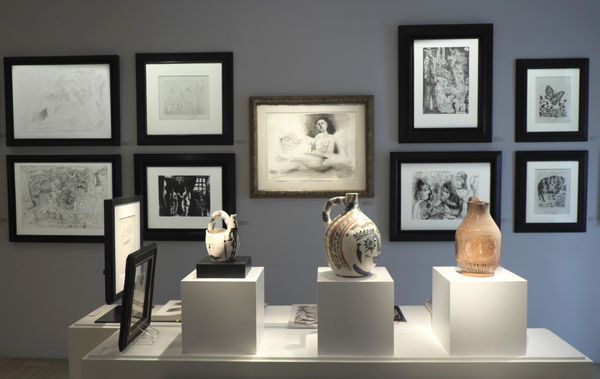
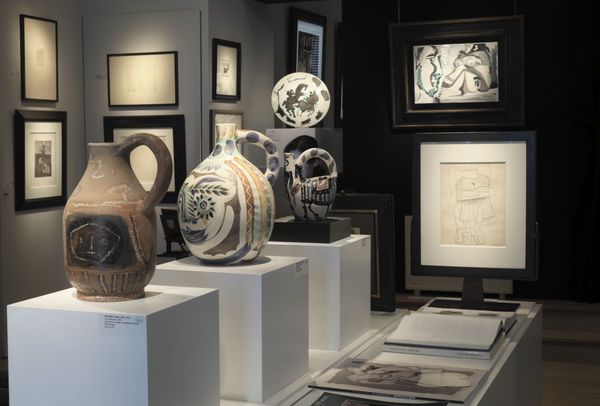
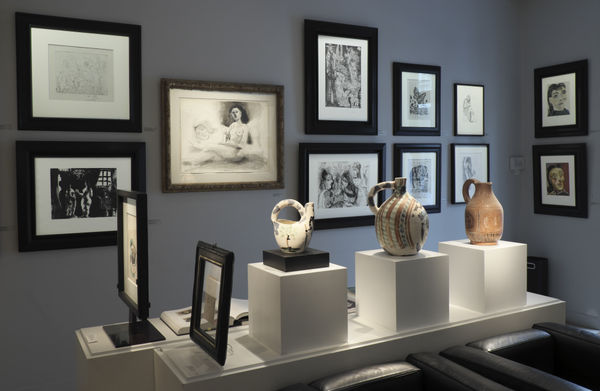
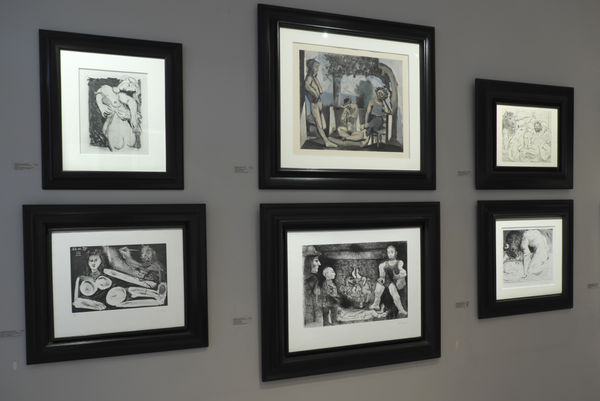
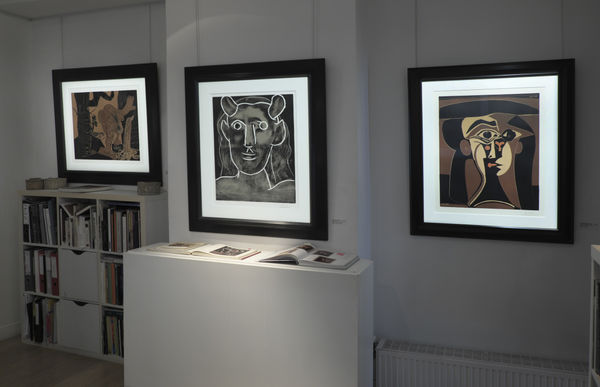
Located for over a decade next to the Musée Picasso, the Galerie Jean-François Cazeau has played a key role in the discovery of the artist's graphic work, often presented in conjunction with exhibitions. Pablo Picasso: MasterPrints offers a panoramic view of the artist's graphic creations through all his techniques, series and creative periods.
-
 Pablo PicassoThéâtre ou télévision: cape et épée , 1968Aquatint and etching on Rives vellum paperImage: 29.5 x 34.5 cm
Sheet: 45.5 x 52 cmN° 18/50From an edition of 50. Printed by the Atelier Crommelynck, ParisEdited by Galerie Louise Leiris, ParisSigned on the lower right corner -
Pablo Picasso, Tête de femme n° 5 (Portrait of Dora Maar), 1939-42
-
Pablo PicassoTête de femme n° 4 (Portrait of Dora Maar), 1939Aquatint, scraper and drypoint on Montval paper with Vollard watermarkImage: 29.9 x 23.7 cm (11.8 x 9.3 in.)
Sheet: 45 x 34 cm (17 3/4 x 13 3/8 in.)
Framed: 65.5 x 56 cm (25 3/4 X 22 in.)Numbered in pencil “50/80”. Printed by Lacourière. -
Pablo Picasso, Tête de femme n° 2 (Portrait of Dora Maar), 1939
-
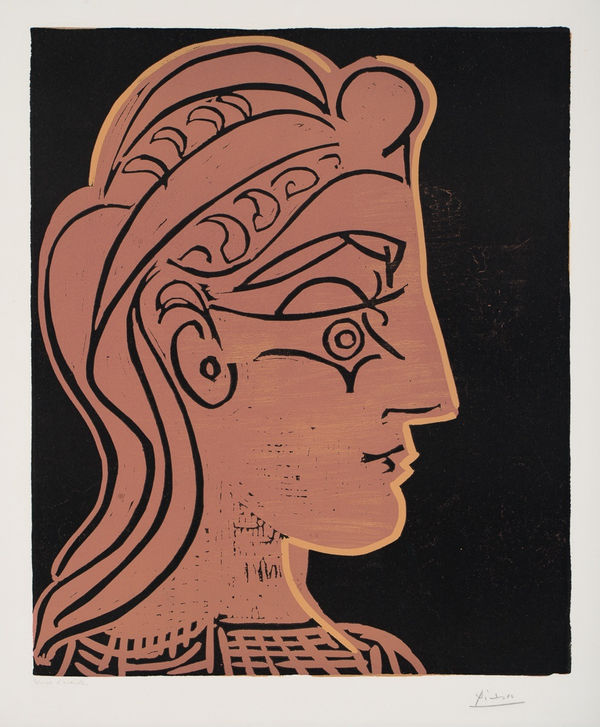
Pablo Picasso, Tête de femme de profil, 1959
-
Pablo Picasso, Souvenirs: Cirque, avec El Gigante et autoportrait en bébé-vieillard, 1968
-
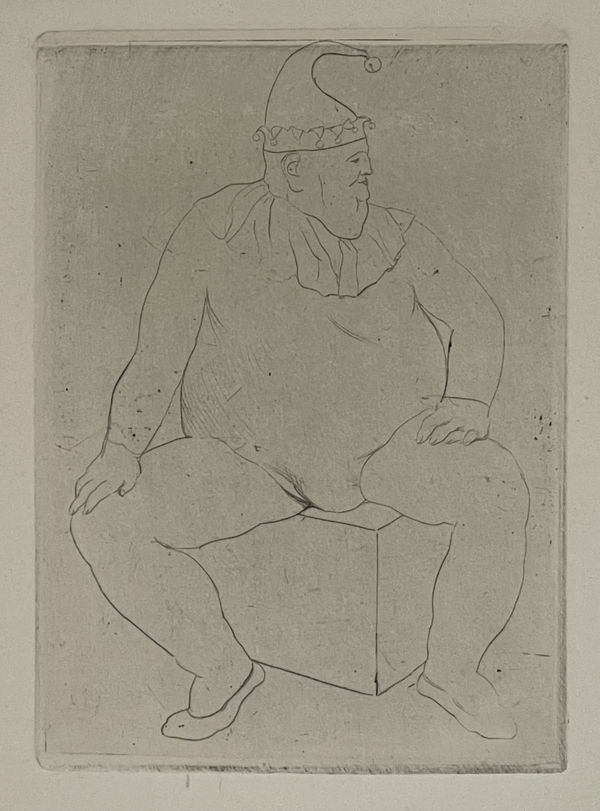
Pablo Picasso, Saltimbanque au repos, 1905
-
Pablo PicassoSalomé , 1905EtchingImage: 34.8 x 40 cm
Sheet: 44.8 x 55 cmOne of 27 proofs printed by Fort with background tinting on old Japon for Ambroise Vollard, before the run of 250 on Van Gelder laid paper.Unsigned and un-numbered by the hand of the artist.Signed and dated in the plate -
Pablo PicassoProfil sculptural de Marie-Thérèse, 1933Etching and dry-point on Montval paper, "Picasso" filigree31,8 x 22.8 cm (image)
45 x 34 cm (sheet)Edition of 55, printed by Lacourière, Paris, in 1942. This edition was printed on the same paper as was used for the Vollard Suite.Unsigned -
Pablo Picasso, Peintre et son modèle au collier, 1966
-
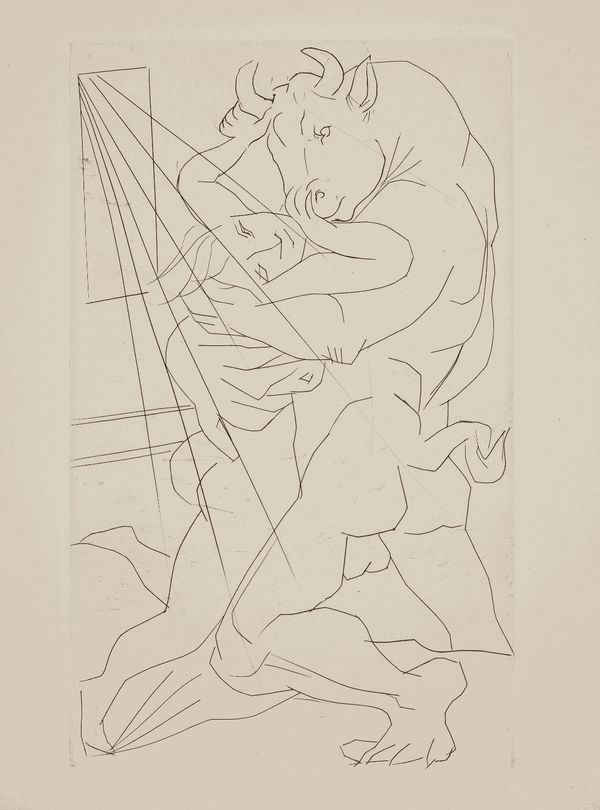
Pablo Picasso, Minotaure embrassant une femme, 1934
-
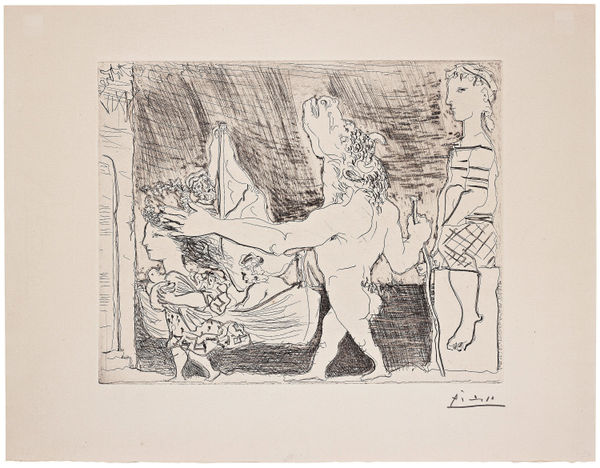
Pablo PicassoMinotaure aveugle guidé dans la nuit par une petite fille au pigeon , 1934Etching and drypoint on copper plateImage: 24 x 30 cm
Papier: 34 x 43.7 cmEdition of 260 on Montval paper, filigree "Picasso". Printed by Lacourière, Paris. Edited by Ambroise Vollard, Paris.Signed by the artist on the lower-right corner -
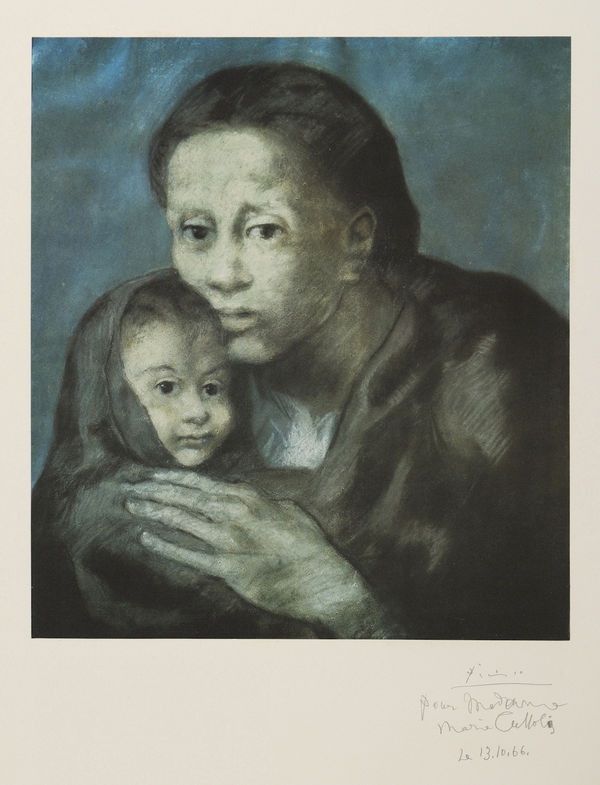
Pablo Picasso, Mère et enfant au fichu, 1966
-
Pablo Picasso, Maison close. Médisances. Avec profil de Degas au nez foncé, 1971
-
Pablo PicassoLes Saltimbanques, 1905Etching on Van Gelder vellum paper28.8 x 33 cmEdition à 250 exemplaires, Editée par Ambroise Vollard. Imprimée par Louis Fort, ParisFiligrane VollardSigned and dated on the plate
-
Pablo Picasso, Les Ménines, 1959
-
Pablo PicassoLe Papillon, 1936-1942Sugar-lift Aquatint, scraper and dry point on Imperial Japanese paper.37 × 27 cm (14 ½ x 10 5/8 in.)
Framed: 62 x 53 cm (24 ½ x 21 in.)One of the rare titled 35 prints on Imperial Japanese paper.
Print Roger Lacourière workshop, Paris. -
Pablo Picasso, Le Faune, 1962
-
Pablo PicassoLe Bélier, 1936-1942Sugar-lift Aquatint, scraper and dry point on Imperial Japanese paper.37 x 27 cm (14 ½ x 10 5/8 in.)
Framed: 62 x 53 cm (24 ½ x 21 in.)One of the rare titled 35 prints on Imperial Japanese paper.Print Roger Lacourière workshop, Paris. -
Pablo Picasso, La Puce, 1936 - 1942
-
Pablo PicassoLa Grande Corrida, 1934Etching on copper-plate, on Montval "vergé" paper.Image: 48.7 x 69.7 cm
Sheet: 56.8 x 77.5 cmEdition of 50. The edition, planned by Vollard at 50 examples, was never delivered or paid for due to the death of the great Parisian dealer. The proofs were bought in 1960 by a Parisian dealer. Only a few (four or five) prints, sold by Lacourière, were signed by Picasso.Non-signed -
Pablo Picasso, La Chèvre, 1952
-
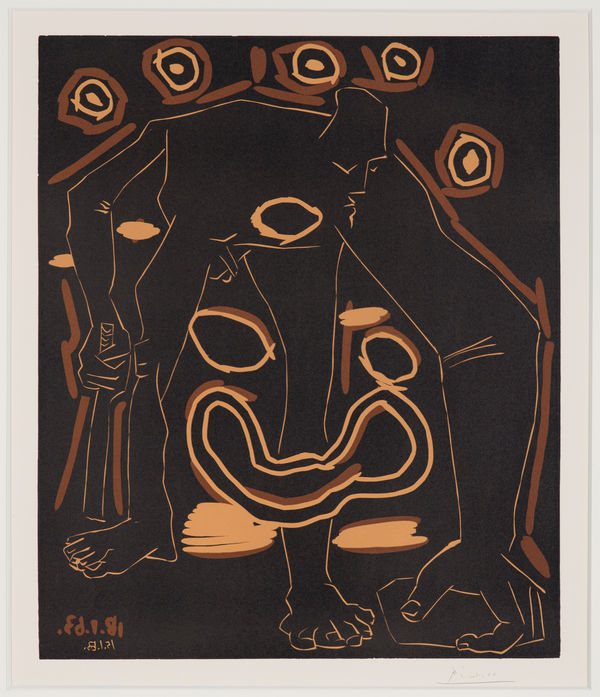
Pablo PicassoHomme au Bâton/Le Vieux Bouffon, 1963Linocut, printed in color on Arches paperImage: 64 x 53.6 cm (25 ¼ x 21 1/8 in.)
Sheet: 75.2 x 62.5 cm (29 5/8 x 24 5/8 in.)
Framed: 100 x 91 cm (39 3/8 x 35 7/8 in.)One of a rare few artist proofsPrinted by Arnèra (Vallauris)Signed « Picasso » on the lower right in pencil -
Pablo PicassoFemme Torero I, 1934Etching on copper-plate printed on Montval "vergé" paper.Image: 49.7 x 69.7 cm
Sheet: 57.1 x 77.5 cmEdition of 50. The edition, of which Vollard planned 50 proofs, was never delivered or paid for due to the death of the great Parisian art dealer. Only a few (four or five) proofs, sold by Lacourière, were signed by Picasso.Unsigned. -
Pablo Picasso, Femme nue devant une statue, 1931
-
Pablo Picasso, Femme nue à a source, 1963
-
Pablo Picasso, Femme assise en tailleur: Geneviève Laporte, 1951
-
Pablo PicassoBacchanale, 1955Eau-forte et aquatinte en couleurs sur vélin de RivesImage: 47, 4 x 56,3 cm
Feuille: 56 x 76,5 cmEdité par Crommelynck, Paris. Une des rares épreuves d’artistes signées, réservées à Picasso, à l’imprimeur et à l’éditeur, à part de l’édition à 300 exemplaires numérotés et signés.Signé au crayon en bas à droite -
Pablo PicassoAu Bain, 1930Etching on Montval wove-paper with the "Vollard" filigree.Image: 22 x 31.2 cm
Feuille: 34 x 44.5 cmEdition of 260Printed by Lacourière, ParisEdited by Ambroise Vollard, Paris