Pierre Jahan (1909-2003) - Rétrospective

Galerie Jean-François Cazeau, located in Paris’s Marais district since 2009, builds bridges between Modern Masters and post-war art on both sides of the Atlantic, while also embracing contemporary art. For its debut participation in Paris Photo—held at the Grand Palais from November 12 to 15, 2026—and in anticipation of the Bicentenary of Photography (2026–2027), the gallery (which has received the Ministry of Culture’s official label for this anniversary event) will present a retrospective exhibition dedicated to the humanist and surrealist photographer Pierre Jahan (1909–2003). A selection of around forty photographs, illustrating the various techniques employed by the artist as well as his diverse experiments, will offer an opportunity to rediscover the many facets of his body of work.
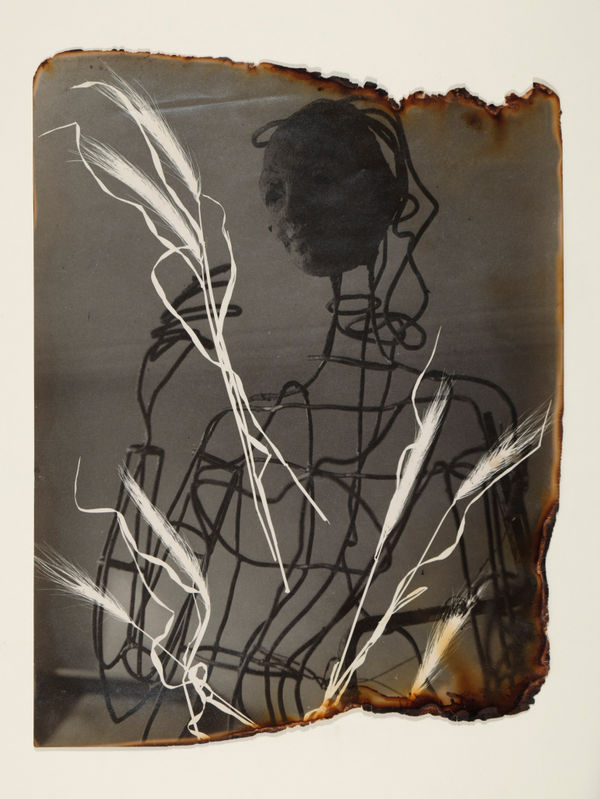
Born in 1909, Pierre Jahan belonged to a generation of photography pioneers who viewed the medium not merely as a scientific or technical practice, but as an art form rooted in pleasure and freedom. He thus joined the ranks of figures such as Henri Cartier-Bresson, Man Ray, Lee Miller, László Moholy-Nagy, and Dora Maar—as well as transatlantic counterparts like Alfred Stieglitz—in the quest to have photography recognized as an art form in its own right, possessing its own unique aesthetic and expressive potential. A protean and unclassifiable avant-garde figure, Jahan treated photography as a creative playground, guided solely by the pleasure of the eye and the hand. While he never subscribed to any dogma, preferring to preserve his freedom, a sense of whimsy remained the unifying thread of his work. He blended the vital impulse of life with the mechanisms of creation, fearlessly experimenting with techniques such as the rayograph, photogram, superimposition, photomontage, and photocollage.
Having settled permanently in Paris in 1933, Pierre Jahan joined the ranks of photographers such as Brassaï, Robert Doisneau, and Henri Cartier-Bresson, all eager to reveal a different side of Paris and capture its many facets. He moved fluidly between images rooted in the real world—sometimes unflinching, such as his shots of the Occupation or the battle for the Liberation of Paris—and imaginative flights of fancy, often tinged with humor. Jahan possessed the rare gift of moving seamlessly between the disparate worlds of photojournalism and Surrealism, particularly at a time when artistic ideologies were being aggressively championed in a succession of manifestos.
Jahan’s body of work traverses the 20th century obliquely, unconstrained by convention. It is by turns somber and metaphorical, whimsical and playful, yet always imbued with lyricism. The artist explored and pushed the limits of the photographic techniques available in his era—treating them as a true creative playground—to forge a body of work that is simultaneously rooted in Surrealism and resolutely unique.
-
 Pierre JahanGelatin-silver print, photogram (unique)40 × 30 cmSigned on the lower left.
 -
Pierre Jahan1944...., ca. 1970Photo collage sur décalcomanie.22,5 x 20,5 cmUniqueSigned on the lower left and titled by the artist on the back.
-
Pierre JahanA coeur perdu, 1946Photogramme30 x 40 cmPartially hand coloured monotypeDeveloped by the artist, with the studio stamp on the back. Dated by the artist.
-
Pierre JahanAvec Krups vous maigrirez, 1960Photomontage31 x 21 cmUniquephotomontage tiré par l'artiste et inscrit à la main
-
Pierre JahanCorrida, 1970Photo-collage sur décalcomanie.20,5 x 31 cmUniqueSigned and dated by the artist on the lower left, titled on the back.
-
Pierre JahanEn rêve., 1980Photo-collage30 x 39 cmUnique workSigned and titled by the artist on the lower bord. Dated by the artist on the back.
-
Pierre JahanFaites votre choix, 1938Photomontage17 x 23 cmDédicacé en 1947Photomontage tiré par l'artiste
-
Pierre JahanFeux d'artifices, 1951Photogramme35,5 x 28 cmOne of only a few proofs ever developped by the artist.Photogramme tiré par l'artiste, signed with the studio stamp, titled and dated "Juillet 1951" on the back.
-
Pierre JahanL'Egarée, 1960Photo collage19 x 24,5 cmMonotypeSignée et titrée par l'artiste sur le dos.
-
Pierre JahanL'Herbier surréaliste (Arrehenathrum Elatius), 1945-1948Gelatin-silver print, photogram and burnt edges40 × 31 cm
-
Pierre JahanL'Herbier surréaliste (Artemisia Estracunculus), 1945-1948Gelatin silver print, photogram, burnt edges40 × 31 cm
-
Pierre JahanL'Herbier surréaliste (Carduus Nutans), 1945-1948Gelatin silver print, photogram, burnt edges40 × 31 cm
-
Pierre JahanL'Herbier surréaliste (Cirsium Palustre), 1945-1948Gelatin silver print, photogram and burnt edges40 × 31 cm
-
Pierre JahanL'Herbier surréaliste (Hordeum Murinum), 1945-1948Gelatin silver print, photogram, burnt edges40 × 31 cm
-
Pierre JahanL'Herbier surréaliste (Lotus Corniculatus), 1945-1948Gelatin silver print, photogram, burnt edges40 × 31 cm
-
Pierre JahanL'Herbier surréaliste (Urtica Dioïca), 1945-1948Gelatin silver print, photogram, burnt edges40 × 31 cm
-
Pierre JahanL'Herbier surréaliste. Photogramme autour du graminée, 1945/48Photogramme40 x 31 cmUnique
-
Pierre JahanL'Operette, 1970Photo-collage sur décalcomanie.25,5 x 19,5 cmUniqueSigned bt the artist on the lower right
-
Pierre JahanLa main aux yeux, 1948Photomontage23.5 x 29 cmOne of a fw photographs developped by the artist himself.Signed with the studio stamp and dated on the verso.
-
Pierre JahanLe Cinéma, 1970Photo-colllage sur décalcomanie.22 x 30 cmUniqueSigned by the artist on the lower left, titled on the back.
-
Pierre JahanLe Travail et l'art à l'usine, 1970photo collage sur décalcomanie.24 x 28 cmUniqueTitled by the artist on the back.
-
Pierre JahanNu au chardon, 1952Gelatin silver print, photogram and photo-collage40 × 30 cmSigned by the artist on the lower-left corner.
-
Pierre JahanOn arrête pas le progrès, 1970Photo collage sur décalcomanie20 x 25,5 cmUniqueSigned on the lower left and titled by the artist on the back.
-
Pierre JahanPhotographie de l'incendie de l'appartement , 1948Photographie29 x 24 cmOne of only a few existing photos, developped at the time.
-
Pierre JahanPoisson, 1938Epreuve gélatino argentique21 x 27 cmMonotype
-
Pierre JahanPortrait d'un ange, 1948photomontage30x40 cmOne of few editions of this image, from the lifetime of the artist.épreuve tirée par l'artiste
-
Pierre JahanPortrait d'un ange , ca 1943Photography31,5 x 23,5 cmEpreuve tirée par l'artiste
-
Pierre JahanPost-Mortem, 1950Photomontage23 x 29 cmMonotypePhotomontage tiré par l'artiste, signé avec le cachet de l'atelier sur le verso et daté.
-
Pierre JahanPublicité pour la cristallerie Daum, 1947Photomontage31 x 24 cmUnique
-
Pierre JahanPublicité pout la cristallerie Daum, 194724 x 31 cmUnique
-
Pierre JahanSans titre, ca. 1950Photomontage21 x 30 cmMonotypePhotomontage tiré par l'artiste
-
Pierre JahanSans titre , 1945-1948Gelatin silver print, photomontage, burnt edges.40 × 30 cm
-
Pierre JahanSans titre (Herbier), 1945-1948Gelatin silver print, photogram, burnt edges40 × 31 cm
-
Pierre JahanSans titre (Herbier), 1945-1948Gelatin silver print, photogram40 × 30 cmSigned by the artist on the lower left-corner
-
Pierre JahanSans titre (Herbier), 1945-1948Gelatin silver print, photogram40 × 30 cmSigned by the artist on the lower left-corner
-
Pierre JahanSans titre (Herbier), 1946Gelatin silver print, photomontage, photogram40 × 31 cmSigned on the right, inside the hand silhouette
-
Pierre JahanSans titre (Horloge), 1945photomontage29.5 x 39 cmMonotypephotomontage tiré par l'artiste, with studio stamp on the back.
-
Pierre JahanSans titre (L'Incéndie de l'atelier), 1948Gelatin-silver print40 × 31 cmSigned on the lower right
-
Pierre JahanSans titre (Masque), 1945-1948Gelatin-silver print, burnt edges39 × 30 cm
-
Pierre JahanSans titre (Nu à l'épi), 1945-1948Gelatin-silver print, photogram, burnt edges40 × 31 cm
-
Pierre JahanSans titre (photogramme), 1945-1948Gelatin silver print, photogram and burnt edges40 × 30 cm
-
Pierre JahanSans titre (Statue), 1945-1948Gelatin silver print, photomontage, burnt edges40 × 30 cm
-
Pierre JahanYeux des poupées, 1945Photography20 x 26 cmMonotype
-
Pierrre JahanCette seringue elle peut aussi tuer, ca., 194320,5 x 15 cm